
Credit Union executives face a dual role when providing oversight of contact center operations. They must invest wisely in people, processes, and technology to deliver a timely, professional response each time a member contacts the Credit Union. And they must contain costs to demonstrate fiscal responsibility and return value to those same members.
Strategic Contact’s credit union contact center cost model provides key economic insights that help CEOs, COOs, and CFOs balance the scales between member and institutional needs.
Understand Cost Structure
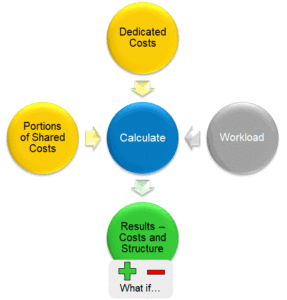 The model takes a comprehensive view of cost by considering contact center specific costs – e.g., labor, technology, network, facilities – and properly allocated shared enterprise costs. Based on workload input on volume and average handle times by contact type and channel, it computes:
- Cost per interaction type – e.g., inquiries and transactions, new accounts and membership, loan servicing and applications, fraud, wire transfers, payments/bill pay
- Cost per channel – e.g., phone, chat, email, text
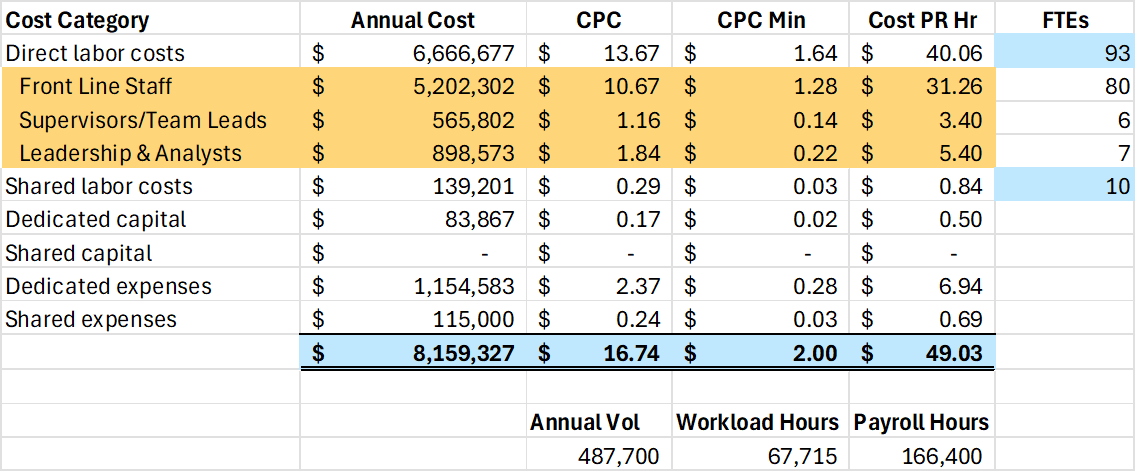
- Overall cost (per contact, minute, and payroll hour) based on weighted average volumes and handle times
In addition to cost structure details and the summary of the cost distribution, results include dedicated labor costs by category (salaries, benefits, bonuses, overtime), and cost distribution for the center (direct labor by role, shared labor, dedicated and shared expenses, dedicated and shared capital).
Conduct “What If” Analysis
Using the baseline cost structure, the model provides the means to measure impact for a variety of strategic initiatives, whether your focus is sales and growth, service and member experience, or efficiency. Strategic Contact can help you explore a variety of “what if” scenarios, such as:
- Identify opportunities to reduce costs or better justify costs during the budget cycle
- “Right-size” staff to match the workload while delivering a high-impact, cost effective member experience
- Invest in technology and/or process improvement to reduce workload (volume and/or average handle time) and assess staffing impacts
- Add analysts, team leads, trainers, and other support resources to improve efficiency and effectiveness
- Compare in-house versus outsourcer costs to weigh options of where and how to handle contact types
- Plan for growth through changes in members served or products per member
With this model, you can avoid “back of the envelope” expectations or vendor promises that may sound too good to be true. Detailed, trusted analysis builds a credible business case for project funding and creates a structure for evaluating results. In addition, end of year/end of project reviews can help facilitate accountability for progress and assess outcomes against expectations.
It’s Easy to Get Started
Credit Unions interested in analyzing their contact center cost structures can sign up for a subscription. With the subscription, we create a current state model, run your “what if” scenarios, provide documented results, and discuss what those results mean for your center, credit union, and members.
Contact Us if you’d like more information or want to discuss possibilities for your center.
The Future Holds Even More Insights
We are excited to engage with credit union leaders to develop a deeper understanding of their contact center cost structure. Once we obtain a critical mass of participants, we expect to share benchmarking information on costs and associated characteristics (e.g., volumes, staffing, performance, channel use, contact types handled, technology maturity, use of outsourcers, etc.), segmented by assets, members, and/or center size, as part of the subscription.
Download the brochure and share it with your colleagues.